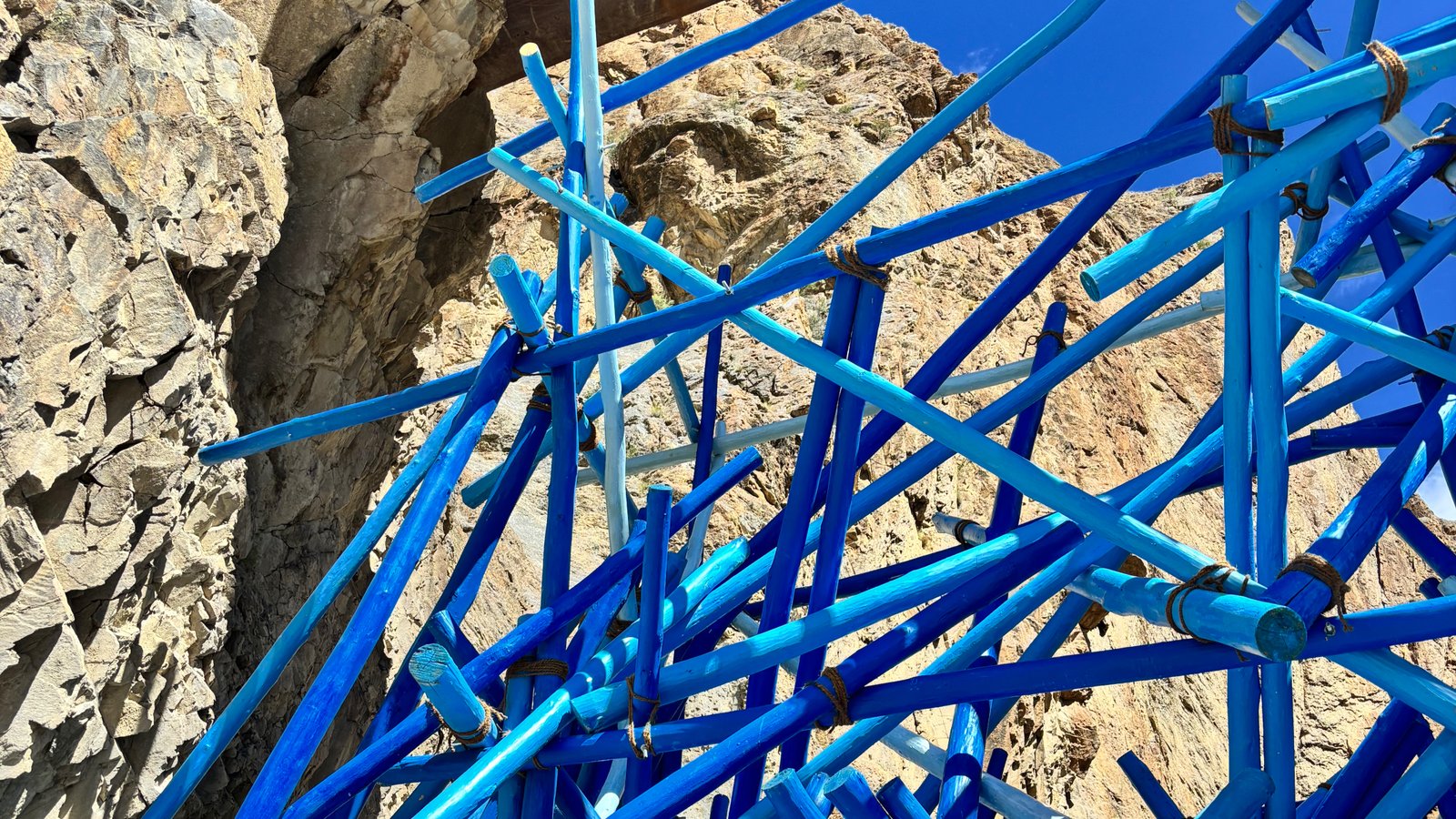
Cover Image Blue Scaffold in the Zbayul by Avantika Bawa for sā Ladakh Biennale
Contracts & Negotiation•Taxation•Sale of Movable Art•Immovable Art Installations•Import/Export & Customs•Dispute Resolution•Intellectual Property•Copyright•Trademark•Design Protection•
Contracts & Negotiation•Taxation•Sale of Movable Art•Immovable Art Installations•Import/Export & Customs•Dispute Resolution•Intellectual Property•Copyright•Trademark•Design Protection•
EducationLL.M. (Toronto) | LL.B. (Jindal)
LeadershipDirector, CALI
Representative Worksā Ladakh Biennale
Principal Counsel
Sahibnoor Singh Sidhu
Counseling artists, artisans, collectors, and cultural institutions through complex contractual, regulatory, and intellectual property challenges.
Sahibnoor Singh Sidhu is an art and cultural heritage lawyer working at the intersection of creative practice, market commerce, and policy reform and a part of RFKN Legal. Holding a B.A.,LL.B. from Jindal Global Law School and an LL.M. from the University of Toronto, he provides specialized legal strategy for artists, gallerists, high-net-worth collectors, and major cultural events, including the sā Ladakh Biennale.
As a Director at the Council for Art and Law Initiatives (CALI), Sahibnoor actively works to strengthen protections for Indian cultural heritage while liberalizing the commercial framework for contemporary visual art.
Key regulatory exemptions, temporary export permits, and international indemnity guarantees for museum loan agreements.
February 2026
Legal Insights & Statutory Guidance
Frequently Asked Questions
Key legal doctrines, statutory frameworks, and tax principles governing art and cultural transactions in India.
NDAs are governed by the Indian Contract Act, 1872, and are vital during private secondary market transactions, pre-acquisition provenance reviews, and confidential gallery representations. While confidentiality covenants are strictly enforceable, clauses must be carefully drafted to avoid violating Section 27 of the Act, which prohibits agreements in restraint of trade.
Under Section 25 of the Indian Contract Act, 1872, agreements made without consideration are generally void. However, important exceptions exist in art practice—notably gifts of artwork made out of natural love and affection between near relations (duly registered under property laws) or formal deeds of gift executed to public museums and charitable trusts.
The Antiquities and Art Treasures Act, 1972 mandates that objects over 100 years old (and specified manuscripts/paintings over 75 years old) must be registered with the Archaeological Survey of India (ASI). While domestic transfers between registered collectors are permitted, antiquities cannot be exported out of India without express statutory permissions.
Public Charitable Trusts offer operational simplicity and are well-suited for family art collections and heritage conservation efforts under state trust laws. Conversely, a Section 8 Company (under the Companies Act, 2013) provides robust corporate governance, institutional credibility, and greater transparency for large-scale biennales, public art spaces, and international cultural partnerships.
Under Section 2(14) of the Income Tax Act, 1961, paintings, sculptures, drawings, and archaeological collections are classified as capital assets. Profits arising from their transfer attract Short-Term or Long-Term Capital Gains Tax depending on the holding period. Proper valuation, indexation benefits, and purchase documentation are critical for tax compliance.
Even in the absence of a registered trademark, the common law remedy of 'passing off' protects renowned artist signatures, gallery insignias, and festival titles against unauthorized imitation. To succeed, the creator or institution must establish goodwill, demonstrate misrepresentation by a third party, and prove actual or potential damage to their commercial reputation.
Copyright law protects the specific physical or digital *expression* of an artwork, never the underlying abstract *idea*, concept, or style. Under Indian law (affirmed in landmark cases like *R.G. Anand v. Delux Films*), another artist may create work using a similar theme, provided they do not substantially copy the material expression, execution, or composition of the original piece.